

Article
An Introduction to Canadian Airmail Postal History
Canadian First Flight Covers
Canadian Aerophilately is best known for the attractive, numerous and generally affordable First Flight Covers, produced from 1928 to 1939 as the Post Office introduced new air mail services.
This was a time when interest in both aviation and stamp collecting was intense and First Flight Covers which combined the two interests were popular collectibles. – When a new service from Fort Chipewyan to Goldfields was opened in 1935, over 3,000 covers like the one below were carried in each direction:
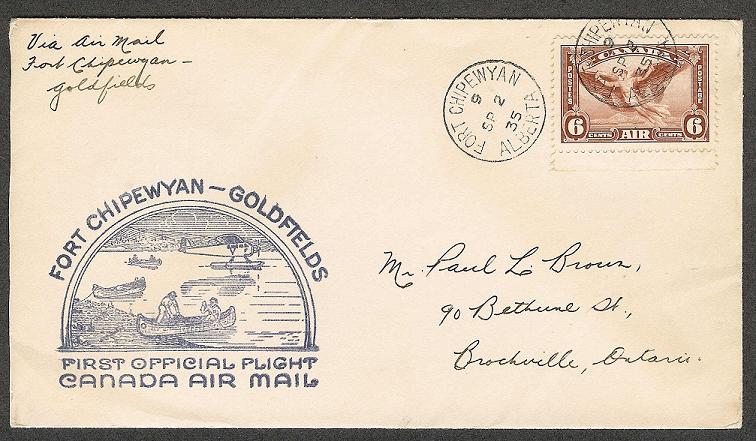
The Post Office sent out notices of coming first flights to those on its mailing list, with instructions as to preparing covers for the flight(s). The flights were also announced in the press and stamp magazines
Collectors were instructed to address covers to themselves with the address at the right to leave room for the cachet, mark it “Via Air Mail”, put the route beneath it, enclose a filler (to receive a good impression of the cachet and postmarkings), prepay it at the air mail rate, and send it, (or them), under cover to the District Superintendent of Postal Service at the distributing city of that flight area. There the covers would receive the cachets and be forwarded to the flight base. They would go forward on the first flights, be backstamped at the receiving points, and forwarded to the address on the cover. However, while some people put their own addresses on the covers, as the notices said, many collectors liked them addressed to the end of the flight.
These covers are frequently sold today for between $2 and $5.- However, the price will often be higher if the cover has been franked with unusual stamps; is to a destination outside Canada or the United States; or was signed by the pilot.
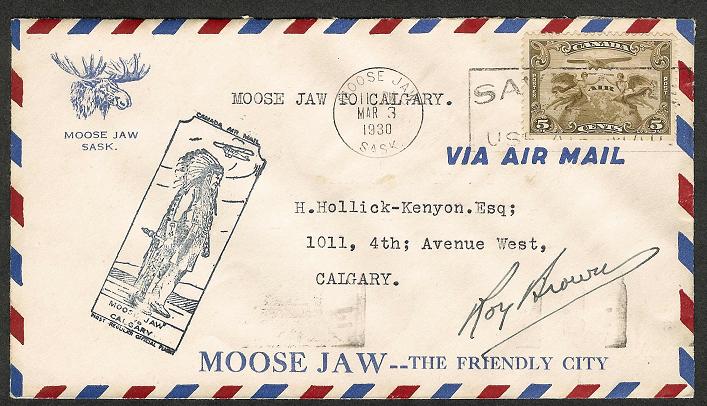
I lived in Winnipeg at the time, so I could go out to the airfield, and walk into a Company’s office. If the pilot was in, they would sign the cover. If the pilot was away on a flight, you could leave the cover with the Company, and the pilot signed it they got back. You could also mail your cover to a Comapny’s office at another airfield, and they would get it signed for you. Another method was to mail your covers to M. Robertson Arlidge, who was a stamp dealer operating as “Bob of the Northland”, and he would arrange to get them signed.
A brief history of Canadian Air Mail Flights
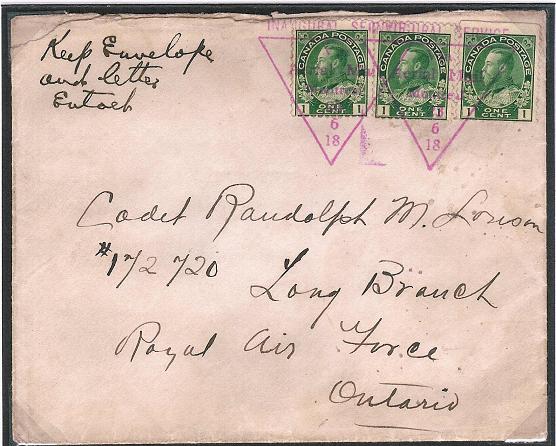
The first air mail flight in Canada was from Montreal to Toronto on June 24th 1918. It was made by Captain Brian Peck from the Royal Air Force training school at Leaside, outside Toronto, and was planned as part of a publicity event to encourage wartime recruitment. Approximately 125 covers were carried, and given a special cancellation as shown above. This was followed by some 20 more mail carrying flights over the next five years, made by a variety of individuals and organizations. The amount of mail carried on each of these flights was small, and while most Canadian air mail covers are relatively affordable, these pioneer covers tend to be rare and expensive.
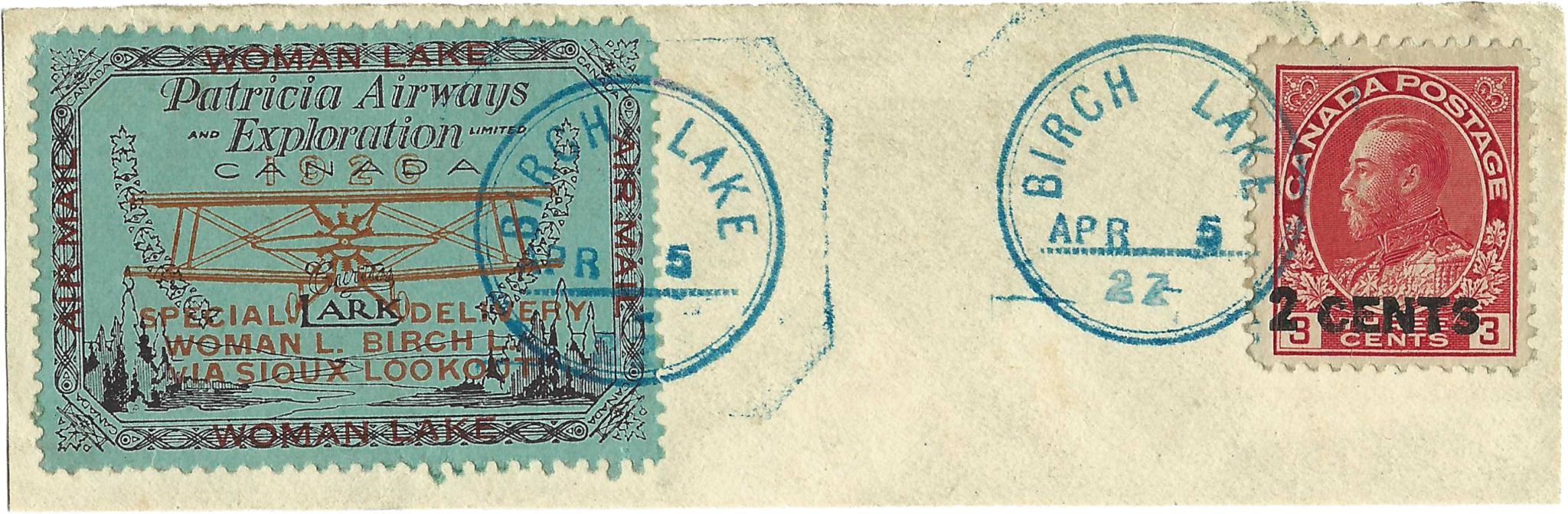
During the 1920’s, a number of companies began flying into remote Northern areas, often in support of prospectors and miners. The Post Office allowed these companies to charge for letters they carried, and to issue their own stamps. These stamps had a “semi-official” status, as they were sold from post offices, but the Post Office did not assume responsibility for the airmail, or help with the cost of service!
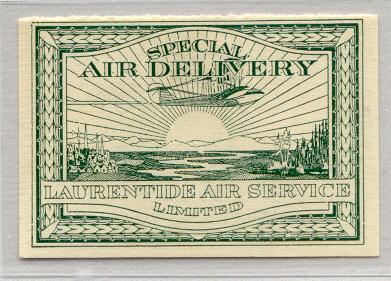
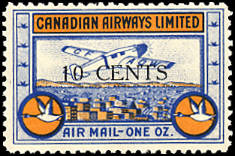
At first these stamps could only be placed at the back of the envelope, and were not allowed to show a value in case they were confused with regular postage stamps. These restrictions were later relaxed.
The Post Office first budgeted money for air mail services in 1927. It began with experimental service between Montreal and Rimouski, designed to connect with trans-Atlantic steamers, and to speed up mail to and from Europe. This was soon followed by additional services, mainly to points that were cut off during winter. No extra charge was made for initial air mail services. No official cachets were produced for these early services, although mail prepared by dealers with unofficial cachets can be found. The Post Office did not begin providing cachets until 1928.
In 1928 the Post Office flights were divided into two types:
AIR MAIL SERVICES which provided a faster service than regular air mail. A higher fee was charged for these services after October 1st 1928; and Canada’s first government air mail stamp was issued ten days earlier on September 21st 1928.
AIR STAGE SERVICES which carried all the mail to a point which was very difficult to reach be other means. Mail was normally flown on these services without an additional charge for air mail service, but when a new service was introduced, the air mail rate had to be paid if a First Flight cachet was required.
On March 1st 1939, Trans-Canada Airlines inaugurated a daily air mail service between Montreal, Toronto and Vancouver. To mark this occasion, the Post Office produced forty different First Flight cachets. After this many new air mail routes were opened, but only rarely did the Post Office produce First Flight cachets for them.
On July 1st 1948, ALL UP SERVICE was introduced: all first Class mail within Canada, weighing up to one ounce, then received Air Mail treatment, without the payment of additional fee. This service was gradually expanded until it covered most letters carried in Canada, to the United States, and overseas.
Newfoundland Air Mails
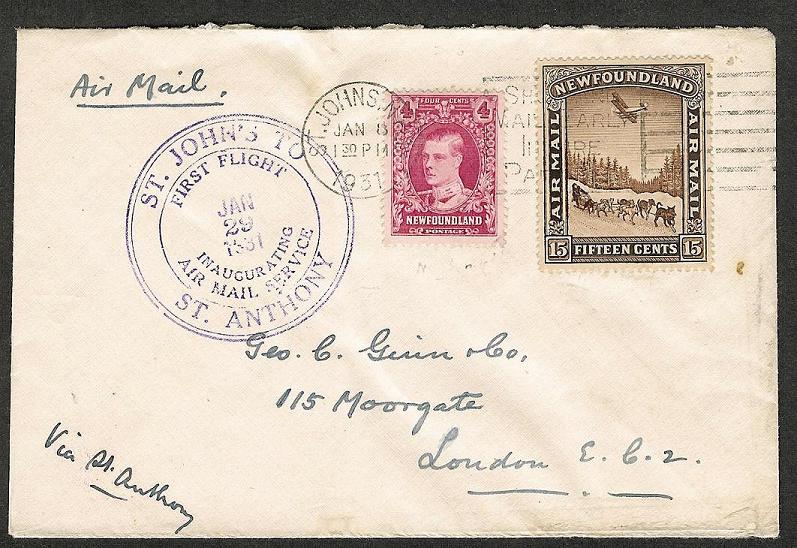
Newfoundland was the starting point for most of the early attempts to fly the Atlantic. The Postmaster-General of Newfoundland arranged for a limited amount of mail to be carried on many of these flights, and issued a number of overprinted stamps for them. Many of these stamps and covers are now very rare and expensive.
There were also a number of attempts to establish internal air mail services in the 1920’s and 30’s, but none of them were successful.
Routes and Rates
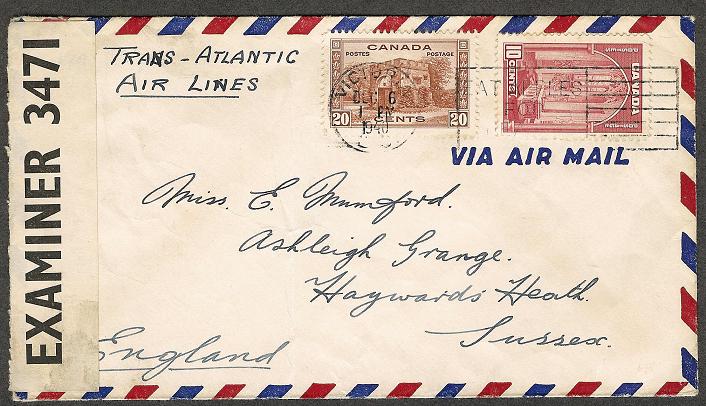
While many aerophilatelists enjoy collecting First Flight Covers, others are more interested in the routes by which commercial air mail has travelled, and/or the postage rates were charged.
The above cover, for example, is franked 30 cents, which covered air mail serice within Canada, a flight across the Atlantic, and any available air mail services in Europe to its destination.
To complete its journey from Victoria to England in December 1940, this cover would have been flown by five different airlines: Canadian Airlines Limited, from Victoria to Vancouver; Trans Canada Airlines, from Vancouver to Montreal; Canadian Colonial Airlines, from Montral to New York; Pan American Airways, from New York across the Atlantic to Lisbon; and finally from Lisbon to Bristol by KLM (Royal Dutch Airlines) who operated a service from Portugal to England for BOAC (British Overseas Airways Corporation).
Modern Day Covers
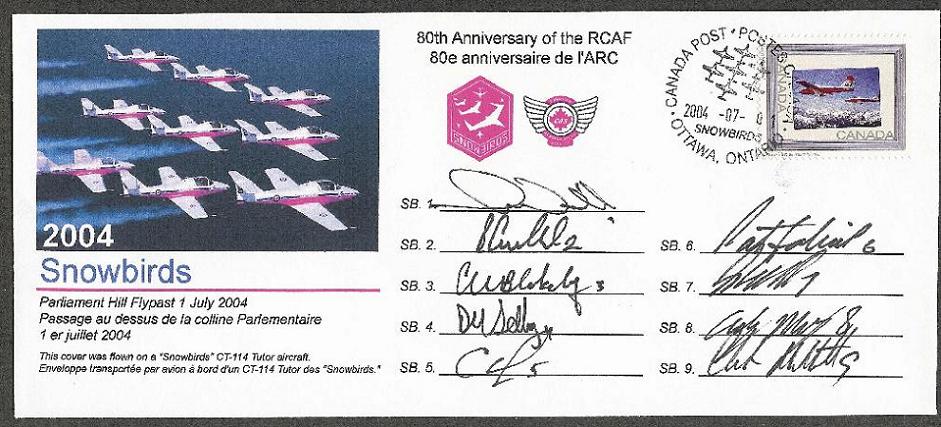
Although the Canadian Post Office no longer produces First Flight cachets, a number of airlines still produce them when new services are introduced. Commemorative covers are also produced by various organizations for airshows, special events, and for the anniversary of historically significant flights.
Pilot Signatures, Canada
The CAS has compiled a listing of more than 250 covers signed by pilots who flew mail in Canada prior to WWII. Letters and related items of memorabilia are included, some containing the pilot’s signature. Any of the scans can be downloaded. Several of the covers are shown below:
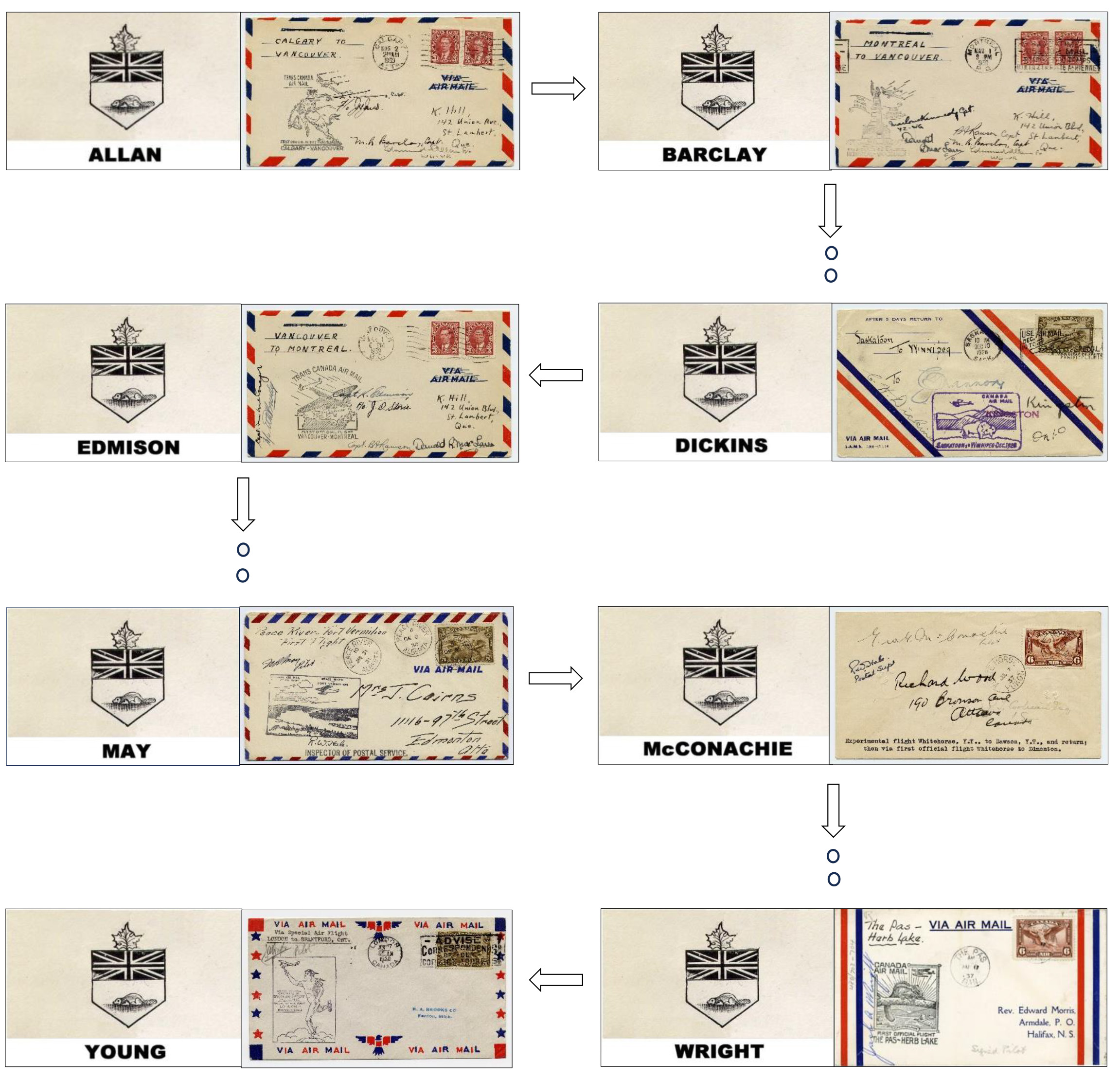
The database is only available to CAS members in the Members section of the website (coming soon).