

Article
The St. Lawrence Air Mail Service, 1927–1939
Summary
Chris Hargreaves’s “Canadian Air Mail Notes #15” reconstructs the Rimouski–Montreal air link — the first continuing air service paid for by the Canadian Post Office, and one designed for a single purpose: shaving a day or more off Trans-Atlantic mail by transferring bags at Father Point, near Rimouski, where inbound steamers routinely took on a St. Lawrence river pilot.
—
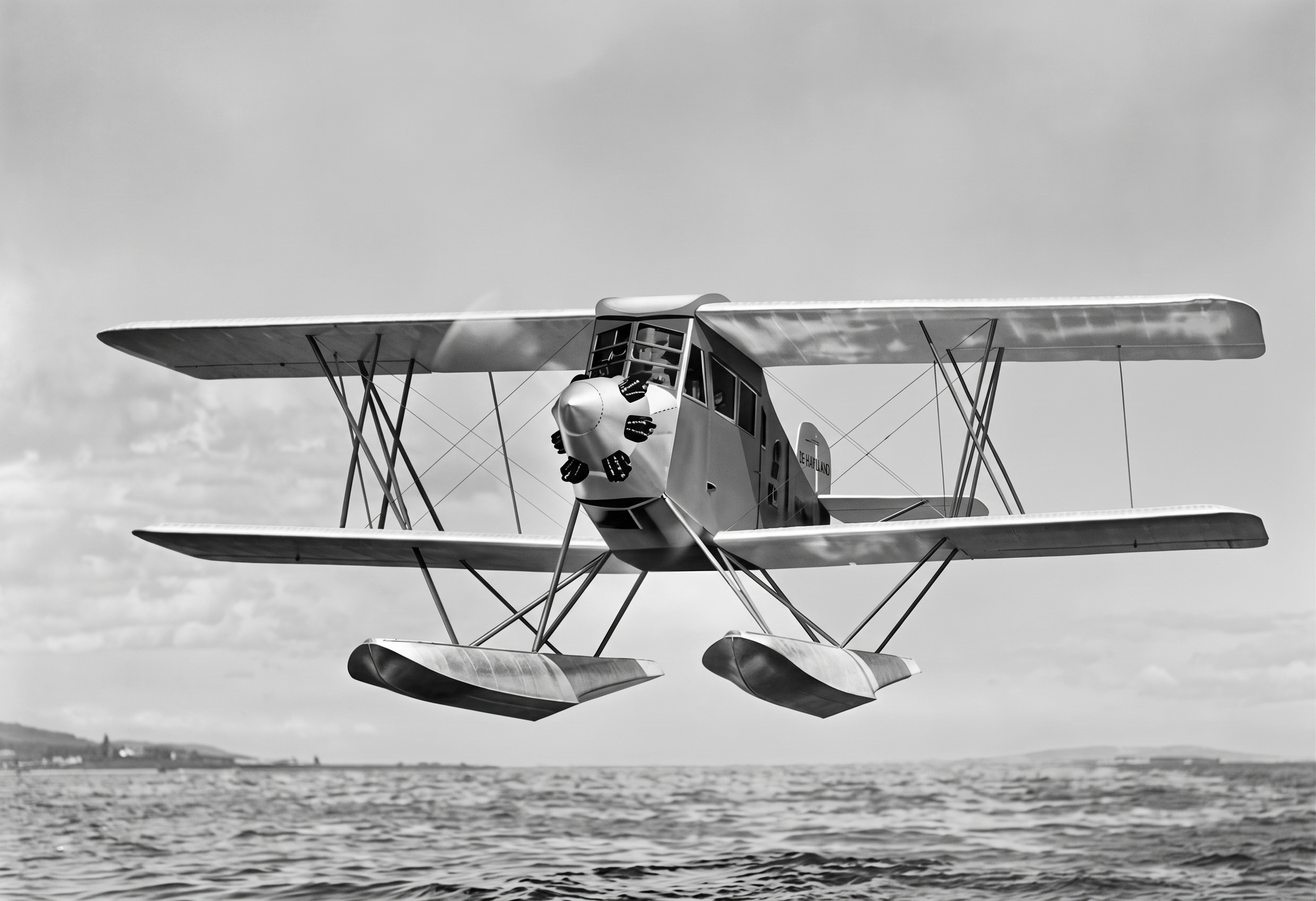
The experimental Vickers Vanessa chosen for the September 9, 1927 inaugural. A damaged strut fitting, sustained in the previous night’s thunderstorm arrival, gave way during the take-off run behind Barnaby Island; the aircraft was destroyed and only its engine salvaged, making it the shortest-lived star of Canada’s first paid air mail service.
Proposed by the Deputy Postmaster General to London’s GPO in December 1926, the service used the pilot boat as ship-to-shore ferry, then a seaplane onward to Montreal.
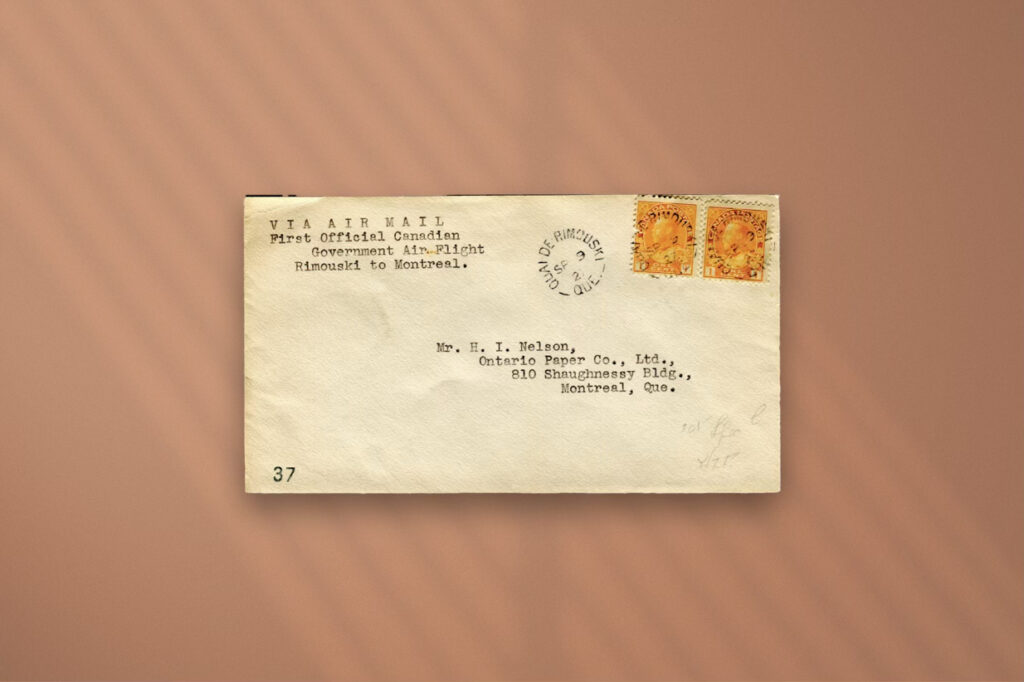
The inaugural flight of September 9, 1927 was a fiasco. Squadron Leader J. H. Tudhope, RCAF, and engineer Gerald LaGrave brought a still-experimental Vickers Vanessa seaplane to Rimouski through a thunderstorm the night before, unknowingly damaging a strut fitting. The next morning 500 pounds of first-class mail were transferred from the Empress of France, but while taxiing behind Barnaby Island the weakened strut failed; a wing sliced the water, the propeller cut a float in half, and the Vanessa was battered to a total loss. The mail was salvaged and arrived at Montreal later than the liner itself. Covers postmarked “QUAI DE RIMOUSKI SP 9 27 QUE” survive not because they flew, but — as the 2011 Toronto Day of Aerophilately concluded — because they were cancelled locally and quietly handed back to their preparer.
A second attempt on September 16 succeeded: an HS-2L flying boat chartered from Canadian Airways carried 500 lbs from the Empress of Australia to Montreal, arriving 24 hours ahead of the ship. The first eastbound transfer followed on September 21, when late Montreal mail was flown down-river to catch the Empress of Australia passing Rimouski (an earlier planned exchange with the Doric on September 12 did not occur). The 1927 season closed with landplane flights from prepared emergency fields.
The service was renewed and expanded in 1928 — two flights per week each way, connected to Toronto and Ottawa feeders — with a “CARRIED BY POSTAL AIRPLANE TO MONTREAL” cachet on inbound mail. By 1929, 114 single trips were made, though most Canada–Britain mail still went overland via New York.
In September 1930 an experimental extension pushed the transfer point out to the Strait of Belle Isle: Canadian Airways hydroplanes met the Empress of Australia at Bradore Bay, carrying PM R. B. Bennett’s mail en route to the 1930 Imperial Conference. A more ambitious “4-day London–Ottawa” relay was staged for the 1932 Imperial Conference (July 12, 1932, also the First Day of the C4 airmail stamp), routing mail through Croydon–Cherbourg by Westland Wessex, across the Atlantic on the Empress of Britain, ship-to-shore by RCN minesweeper into Red Bay, then RCAF Bellanca/Vancouver/Fairchild 71 hops to Ottawa — bringing British mail through in a record 98 hours before schedule changes killed it.
The regular Montreal–Rimouski service continued each navigation season through 1938 without special markings (making flown covers elusive). Diana Trafford’s discovery of a Quebec Airways annual report resolved the long-standing 1939 question: the service did run, carrying 3,089 lb before being cancelled after the outbreak of war.

Diagram of the ambitious “4-day London–Ottawa” relay: Westland Wessex Croydon–Cherbourg, Empress of Britainacross the Atlantic, RCN minesweeper into Red Bay, then Bellanca floatplane → Vancouver flying boat → Fairchild 71 landplane on to Ottawa via Havre St. Pierre and Rimouski — the fullest expression of the St. Lawrence airmail concept, retired within weeks when steamer schedules changed. ∎