

Exhibit
Canadian Interrupted (Crash) Covers to, from, and within Canada, 1905-1984, by Canadian and Foreign Airlines. Dick Malott
Dick Malott’s 8 frame exhibit that was shown at the St. Petersbourg 2007 FIP Show, Russia.This exhibit was awarded several Large Vermeil FIP Medals, the last being at Espana 2006 in Malaga, Spain, 7 to 13 October 2006. It also won the Grand Champion Award at ORAPEX 2006 in Ottawa, Ontario.


Keywords
Crash mail; Interrupted flights; Canadian airmail; Newfoundland airmail; Salvage markings; Ambulance covers; Wartime mail; Moose Jaw; Prestwick; Air Canada.
Summary
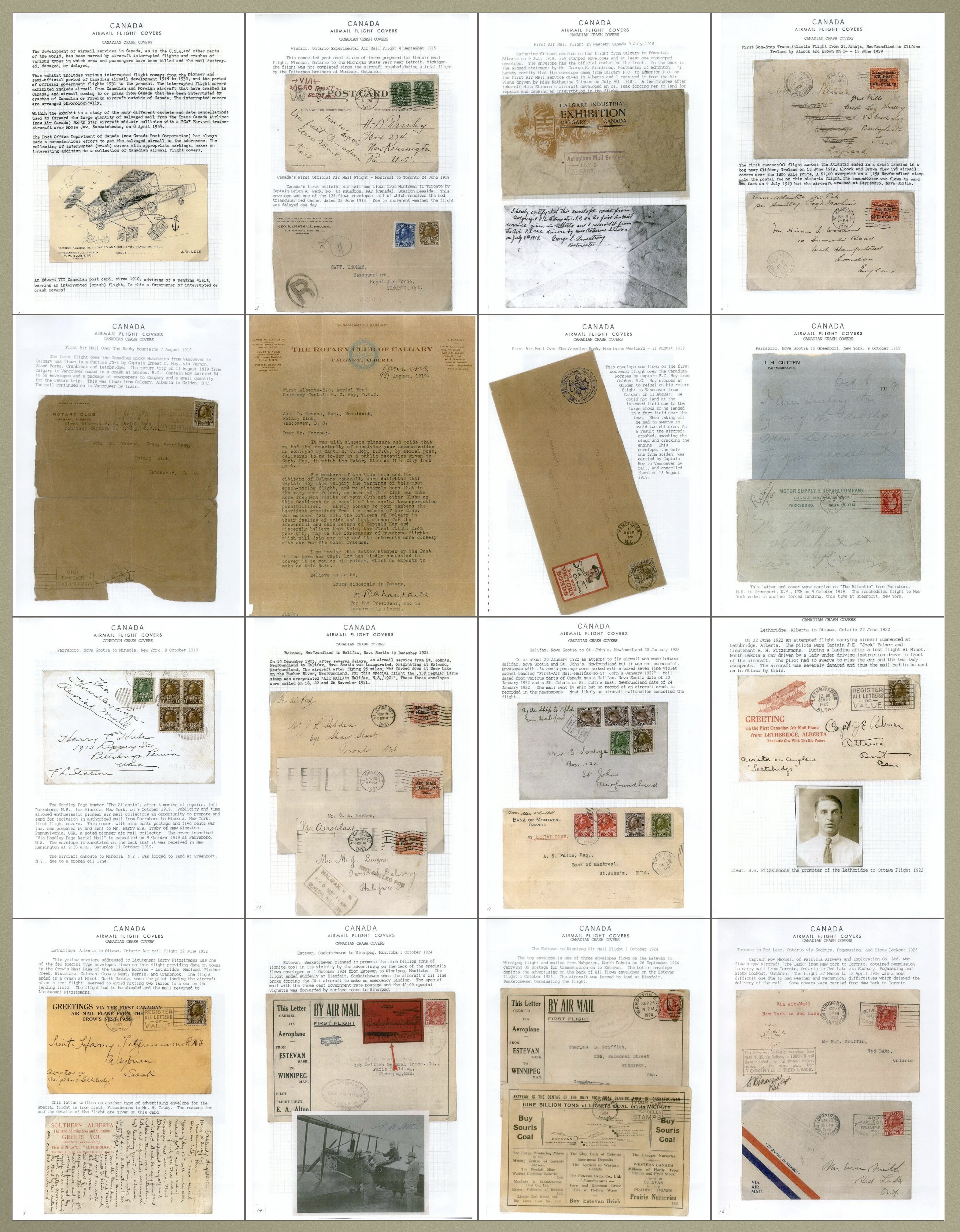
Dick Malott’s eight-frame exhibit examines interrupted and crash mail connected with Canada and Newfoundland. Early material distinguishes weather delays and forced landings from destructive accidents. Covers associated with Brian Peck, Katherine Stinson, transatlantic attempts, Rocky Mountain flights, and the Estevan–Winnipeg service establish the subject’s origins in pioneer aviation. (Frame 1)
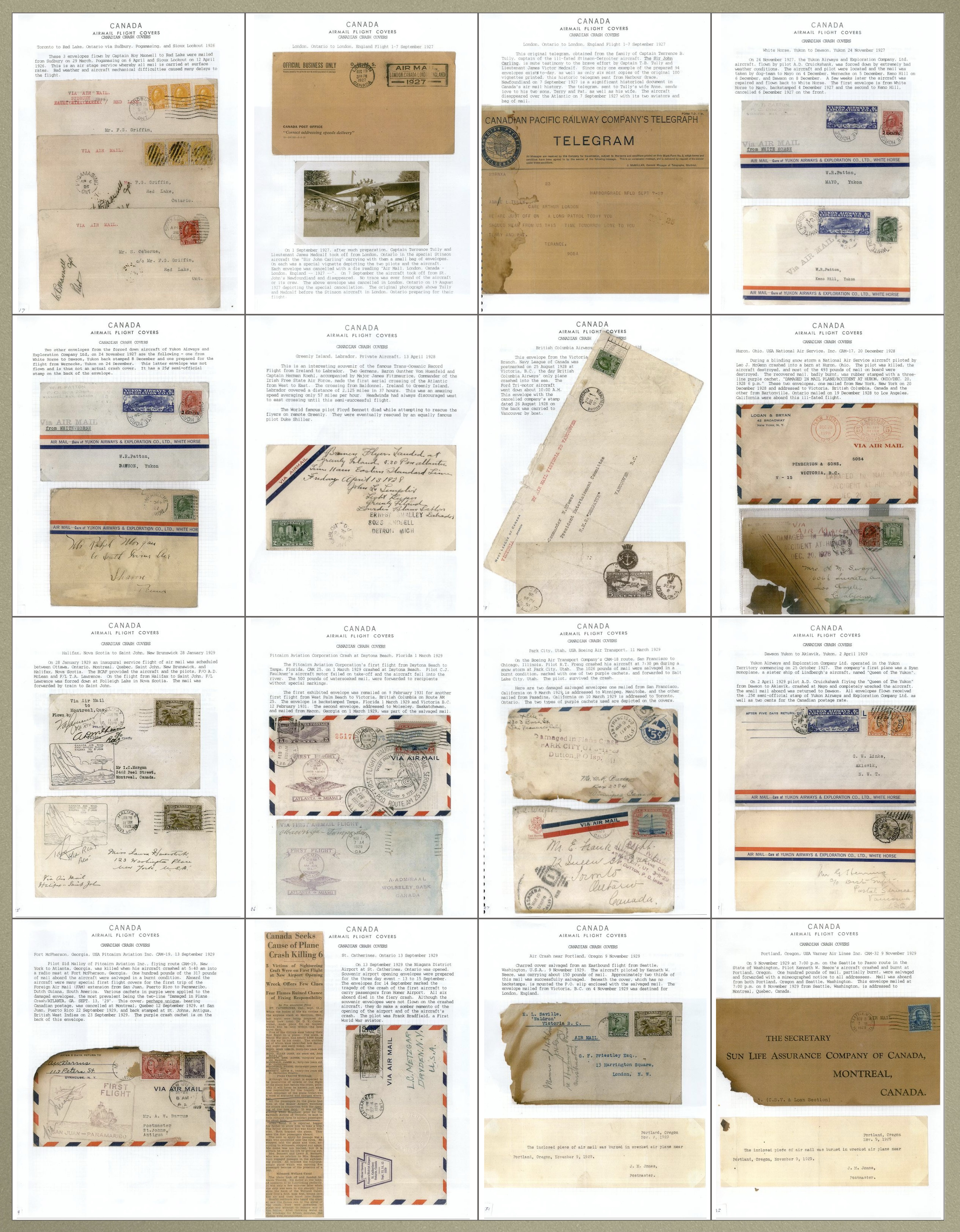
The chronological account continues through northern operations, transatlantic ventures, and American routes carrying Canadian correspondence. Yukon Airways covers appear alongside material associated with the Sir John Carling attempt and later accidents. Damaged envelopes, explanatory notices, and supporting correspondence document interrupted journeys, including the Canadian Airways crash near Dunnville in 1931. (Frames 2–3)
Canadian and overseas incidents demonstrate how mail survived accidents far from its origin or destination. The Regina and Armstrong crashes are represented alongside Imperial Airways losses and wartime military correspondence. Salvage handstamps, accompanying letters, and replacement envelopes record subsequent postal handling, while the wartime material requires caution when identifying individual accidents. (Frames 4–5)
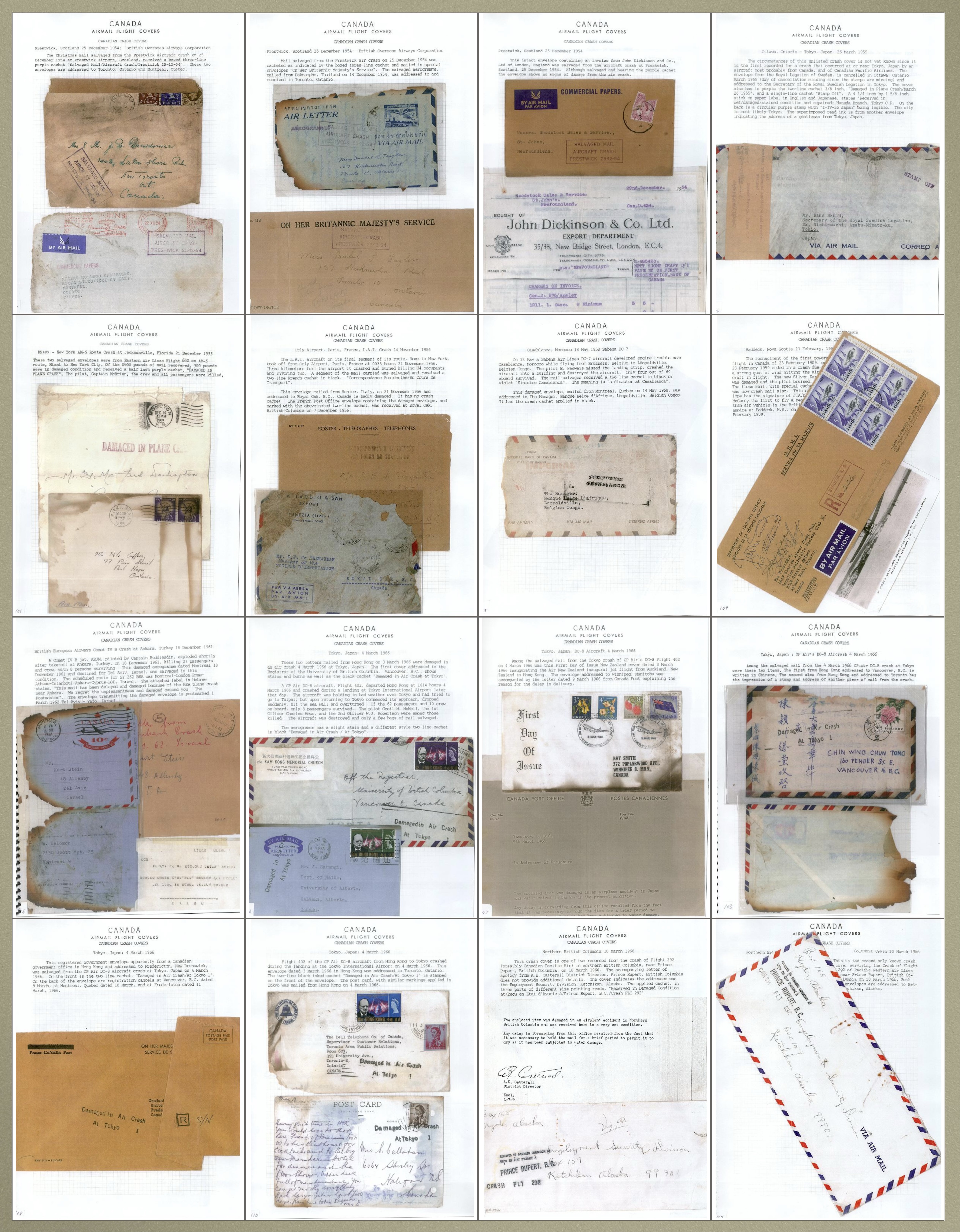
Particular attention is devoted to the 1954 Moose Jaw collision involving a Trans-Canada Air Lines North Star and an RCAF Harvard. Numerous covers illustrate different salvage markings, inspection handstamps, and official explanations. The subsequent Prestwick study compares damaged correspondence, postal stationery, and markings applied after the Christmas Day BOAC crash. (Frames 5–7)
Later material extends the geographical coverage through accidents in Europe, Africa, Asia, and North America. The Canadian Pacific crash at Tokyo in March 1966 receives several pages. Burnt envelopes, water-damaged correspondence, forwarding containers, and postal notices show the different conditions in which surviving mail reached recipients after interrupted air transport. (Frame 7)
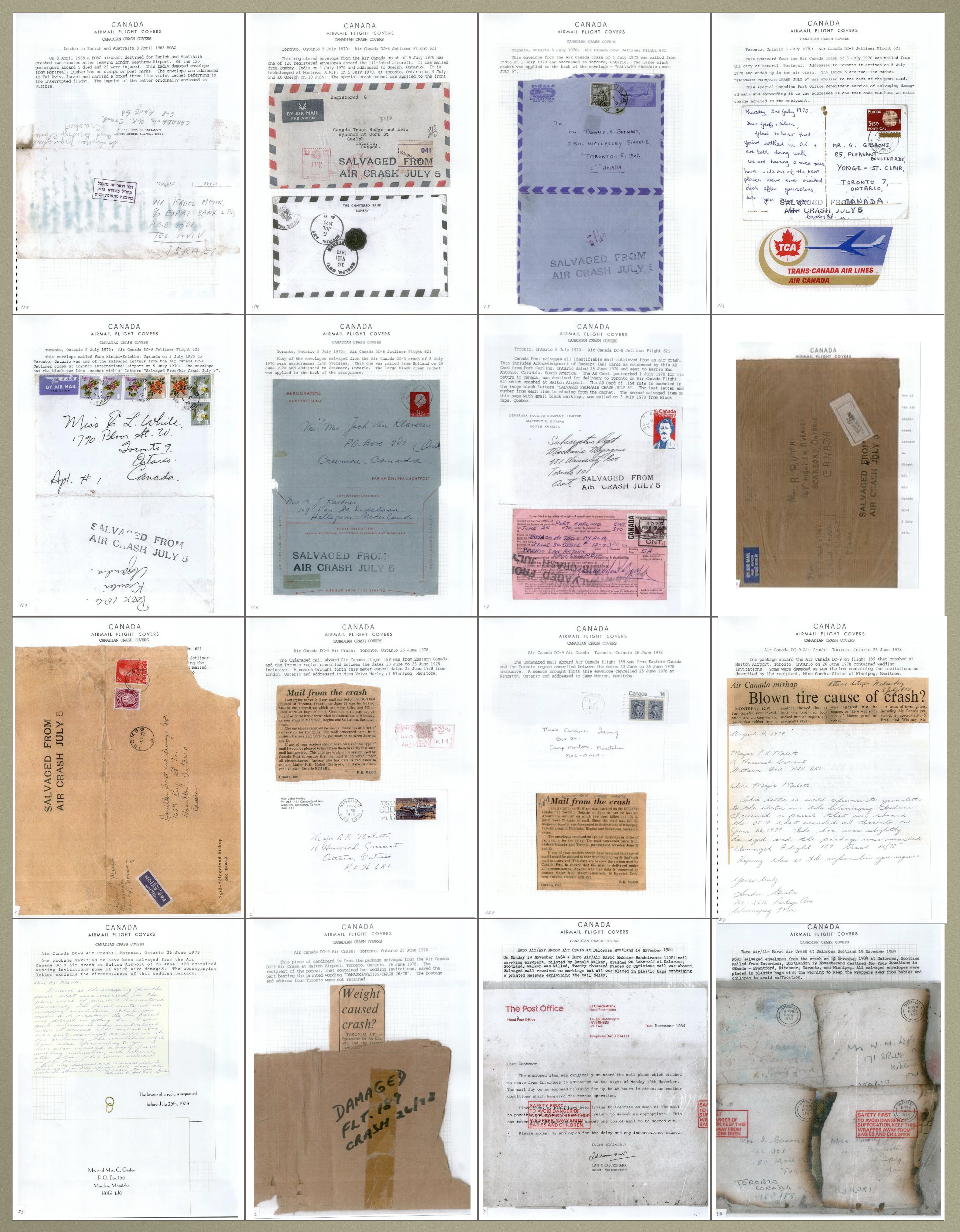
The final frame includes the 1968 Heathrow accident and substantial groups from Toronto crashes in 1970 and 1978. Letters, postcards, an aerogramme, and damaged packaging illustrate varied mail classes. Wedding invitations and accompanying correspondence provide a personal dimension. The exhibit concludes with mail recovered following the 1984 Dalcross crash in Scotland. (Frame 8)