

Exhibit
Evolution of Air Mail – Toronto, Canada from Biplane to Jet
Neil Hunter’s 6 frame exhibit. The exhibit has been shown nine times at the National level in Canada and the United States, receiving four gold medals, four vermeil medals, and one silver (first time exhibited) and has received and two American Air Mail Society Metals in Excellence. The exhibit won the Grand Award at Orapex in 2010 and entered the Champion of Champions in the United States.

Keywords
Toronto airmail; Pioneer flights; Brian Peck; Semi-official airmail; Trans-Canada Air Lines; Cross-border mail; SCADTA; Crash mail; Wartime censorship; Jet airmail.
Summary
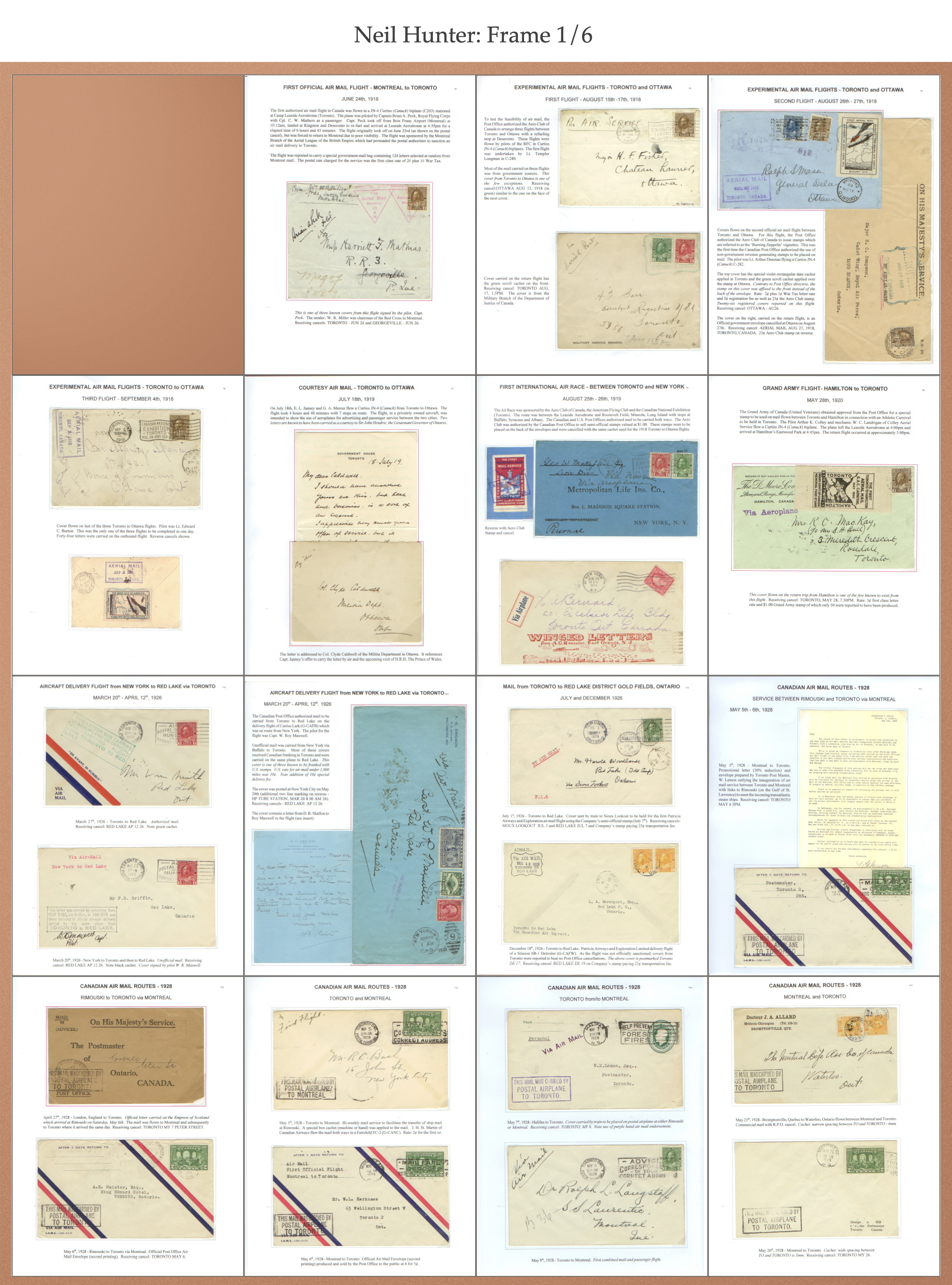
Neil Hunter’s six-frame exhibit traces Toronto’s airmail development from pioneer flights in 1918 to jet services in 1966. Early dated covers document Brian Peck’s Montreal–Toronto flight, experimental Toronto–Ottawa services, the Toronto–New York air race, and subsequent promotional flights. Semi-official northern services and connections with incoming steamship mail complete the opening frame. (Frame 1)
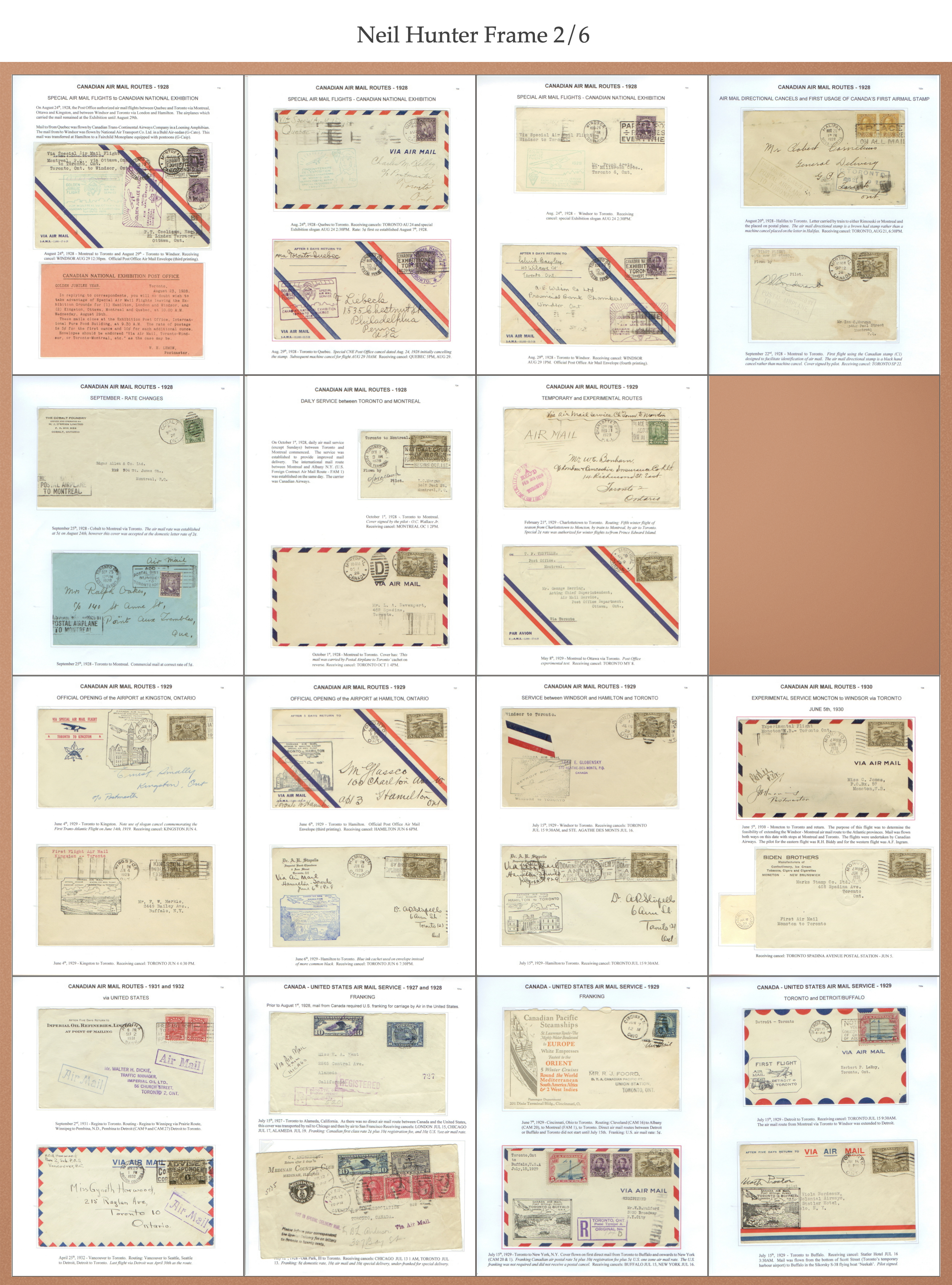
The second frame follows the establishment of more regular services during 1928 and 1929. Canadian National Exhibition flights, Canada’s first airmail stamp, Toronto–Montreal service, and airport openings illustrate this expansion. Covers also demonstrate changing domestic postal rates, mixed Canadian and American frankings, and Toronto’s developing connections with Detroit and Buffalo. (Frame 2)
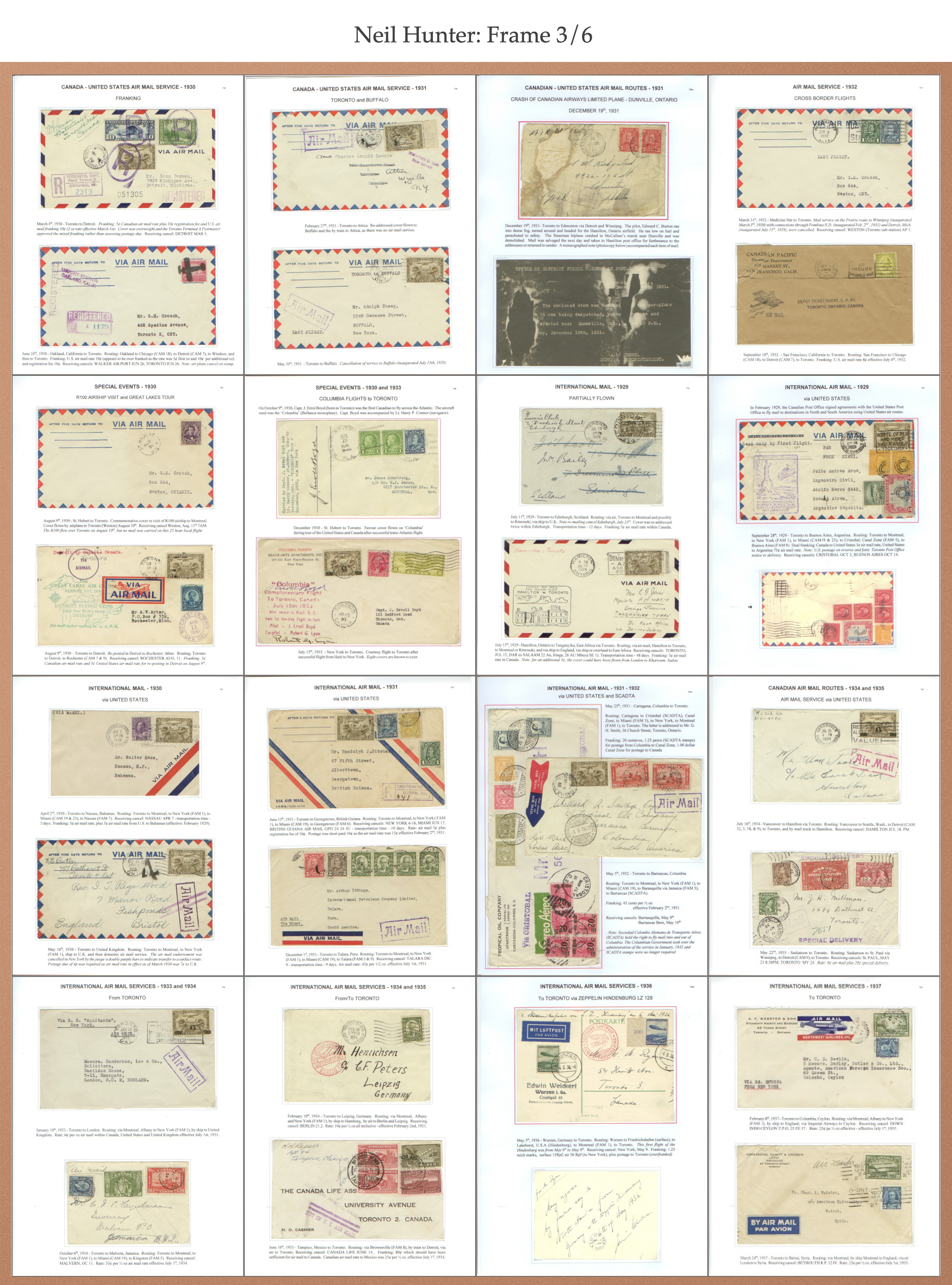
International connections broaden the story through mail exchanged with destinations in Latin America and elsewhere. SCADTA material illustrates Colombian air connections, while airship and Columbia flight items document distinctive aviation events. Covers, postal markings, and international routing instructions accompany salvaged mail from the December 1931 crash near Dunnville, Ontario. (Frame 3)
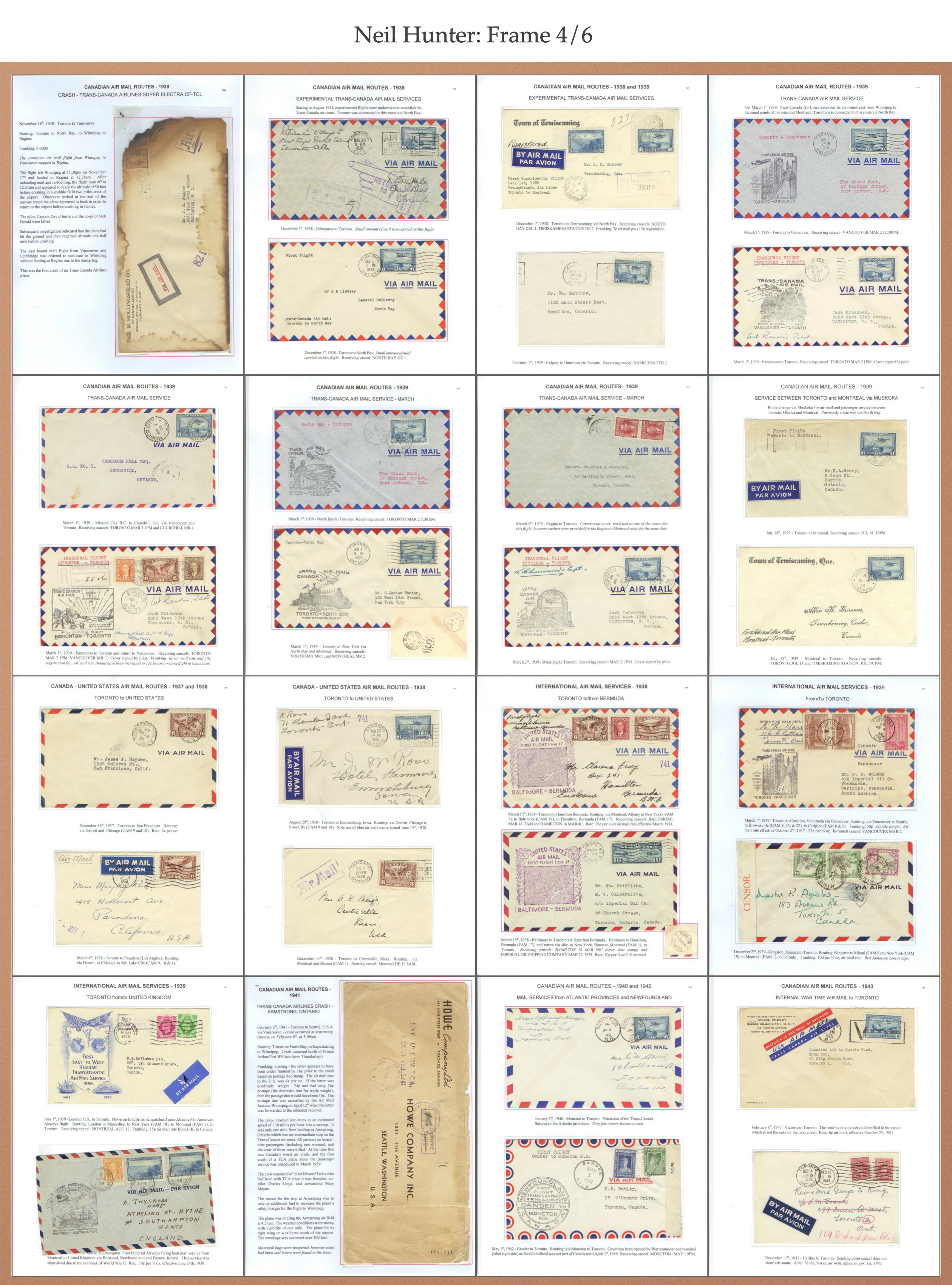
The fourth frame documents experimental Trans-Canada services in 1938 and expanded connections in 1939. Covers record routes linking Toronto with western Canada, northern Ontario, and Montreal, followed by Atlantic connections. Mail recovered from the Regina and Armstrong crashes provides evidence of disrupted journeys alongside inaugural flights and international postal traffic. (Frame 4)
Wartime material explores Toronto’s connections with the United States and overseas destinations. Censorship labels, postal markings, and varied frankings document the handling of international correspondence. Airgraphs, military air letters, special delivery mail, and onward air transport markings extend the treatment beyond inaugural flights to postal practices and wartime communication. (Frame 5)
The final frame follows postwar route development into the jet age. Covers document the Avro Jetliner’s 1950 Toronto–New York mail flight, Super Constellation services, and subsequent DC-8 and DC-9 operations. Transatlantic inaugurals, crash mail, and accompanying postal documentation bring the chronological account through 1966, retaining Toronto as its central geographical focus. (Frame 6)