

Exhibit
When a Daredevil and an RAF Pilot Carried Canada’s Mail
Marc Castel presents a prestige philately exhibit on Canada’s first air mail flights that was on display in the Court of Honour at ORAPEX 2026 in Ottawa, Canada.
Keywords
Brian Peck; Katherine Stinson; Pioneer airmail; Montreal–Toronto; Calgary–Edmonton; Curtiss JN-4 Canuck; Admiral stamps; Flight cachets; Window envelopes; Gordon Mallett.
Summary
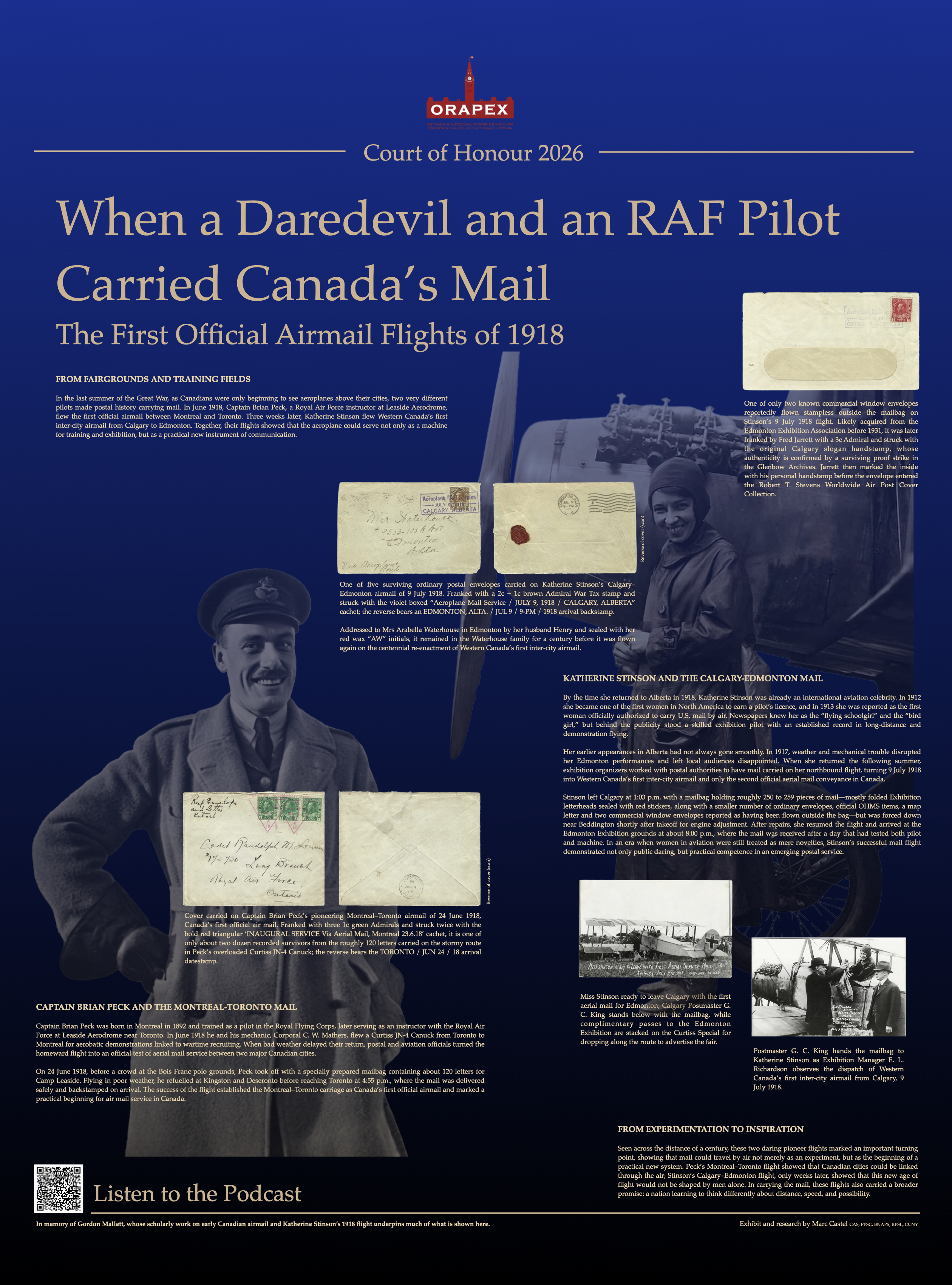
Marc Castel’s exhibit brings together two pioneering Canadian airmail flights of 1918: Captain Brian Peck’s Montreal–Toronto journey on 24 June and Katherine Stinson’s Calgary–Edmonton flight on 9 July. Covers, portraits and photographs connect the postal evidence with the pilots and their aircraft. Presented in memory of researcher Gordon Mallett, the display contrasts Peck’s military flying background with Stinson’s exhibition career, showing how both contributed to the development of aerial communication. (Frame 1)
Peck’s flight is represented by an envelope franked with three green one-cent Admiral stamps and bearing two red triangular inaugural-service markings dated 23 June. The Toronto arrival marking records 24 June, distinguishing the planned departure date from the actual flight after poor visibility caused postponement. Flying a Curtiss JN-4 Canuck with mechanic Corporal Mathers, Peck stopped at Kingston and Deseronto before reaching Camp Leaside, where the mail completed its aerial journey. (Frame 1)
Stinson’s section centres on a cover addressed to Arabella Waterhouse in Edmonton, bearing a two-cent plus one-cent Admiral War Tax stamp, the violet Calgary flight cachet and an Edmonton arrival marking. Its reverse retains a red wax seal. Photographs show Stinson with the aircraft and the presentation of the mailbag. The narrative follows her departure from Calgary, an interruption for engine adjustment, and her arrival at Edmonton that evening with the mail. The Edmonton backstamp is timed at nine o’clock that evening. (Frame 1)
A commercial window envelope introduces a different evidential problem. The exhibit describes it as reportedly carried stampless outside Stinson’s mailbag and subsequently franked and cancelled by Fred Jarrett. AMCN2 identifies the associated three-cent Admiral stamp as an issue of 1923, so its present franking cannot establish postal use in July 1918. By placing this qualified item alongside contemporary flight covers, the exhibit combines aviation history with examination of postal markings, provenance and later alterations to surviving material. (Frame 1)