

Exhibit
The Golden Age of the Rigid Airship
Les Selby’s five-frame exhibit explores the development and operation of rigid airships in Germany, the United States and Great Britain during the first four decades of the twentieth century. Through stamps, flown covers, postal markings, picture postcards and related ephemera, it traces their transformation from experimental aircraft into instruments of national prestige, military ambition and commercial transport. For aerophilatelists, the central story is the relationship between technological achievement and the mail that financed, publicized and commemorated these extraordinary machines.
Pioneering flights and American naval airships
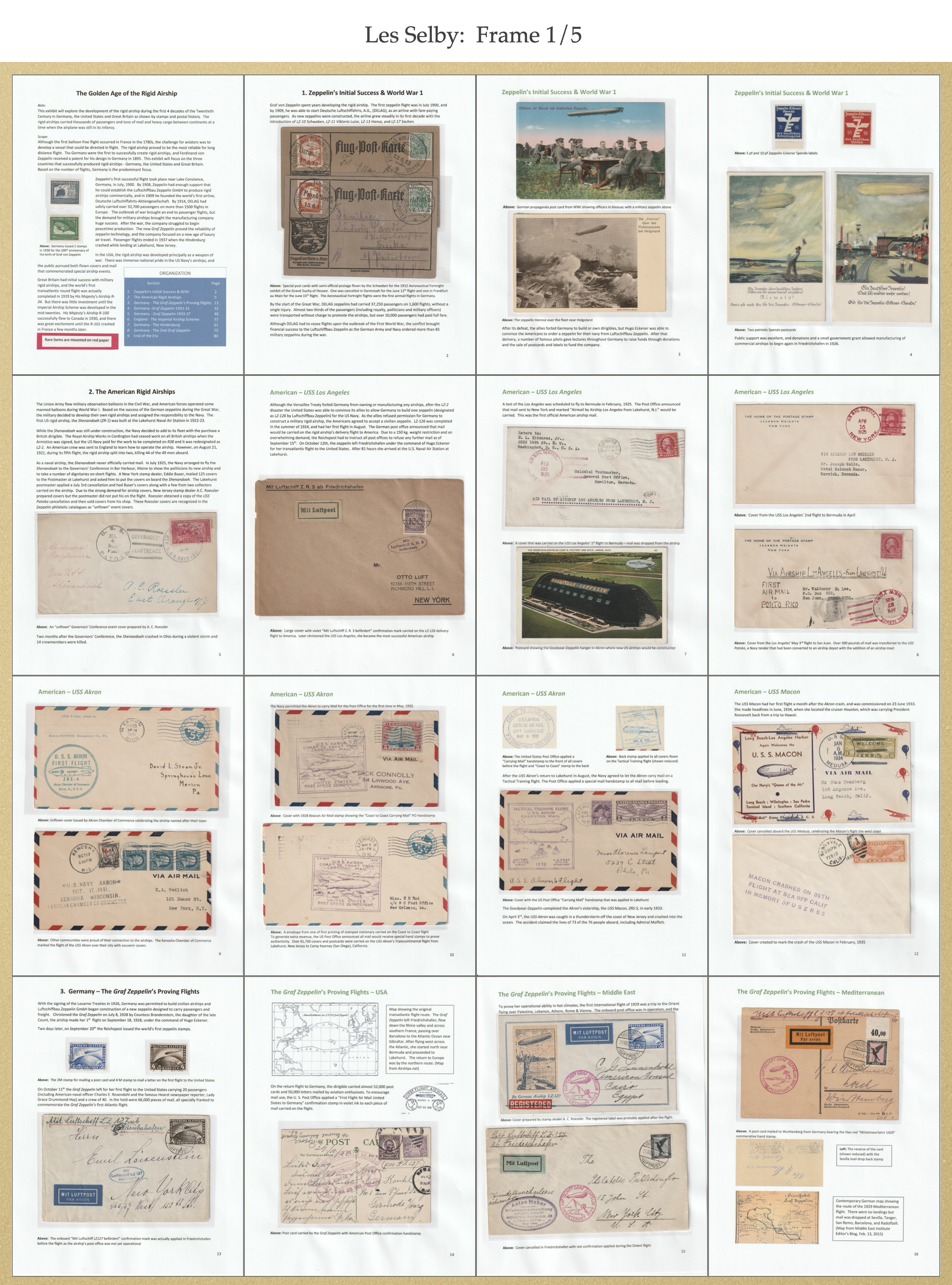
The opening material establishes the German foundations of rigid airship development. Postal cards associated with the 1912 aviation celebrations in the Rhine and Main region introduce early mail carriage, while wartime postcards and propaganda material document the Zeppelin’s changing public image. Selby then turns to the American naval programme, represented by Shenandoah, Los Angeles, Akron and Macon. Here, distinctions between flown mail and commemorative covers are essential: an attractive airship cachet does not necessarily establish carriage aboard the vessel depicted. (Frame 1)
A cover from the German-built ZR-3’s delivery flight to America introduces the airship subsequently commissioned as USS Los Angeles. Other material records its mail flights to Bermuda and Puerto Rico, while Akron covers illustrate transcontinental operations and the enthusiasm surrounding naval aviation. Macon material extends the account to the later American programme. Together, these pages show how relatively limited opportunities for actual mail carriage generated a much broader field of souvenir collecting, including event covers, special cancellations and privately produced cachets. (Frame 1)
Graf Zeppelin: from proving flights to commercial service
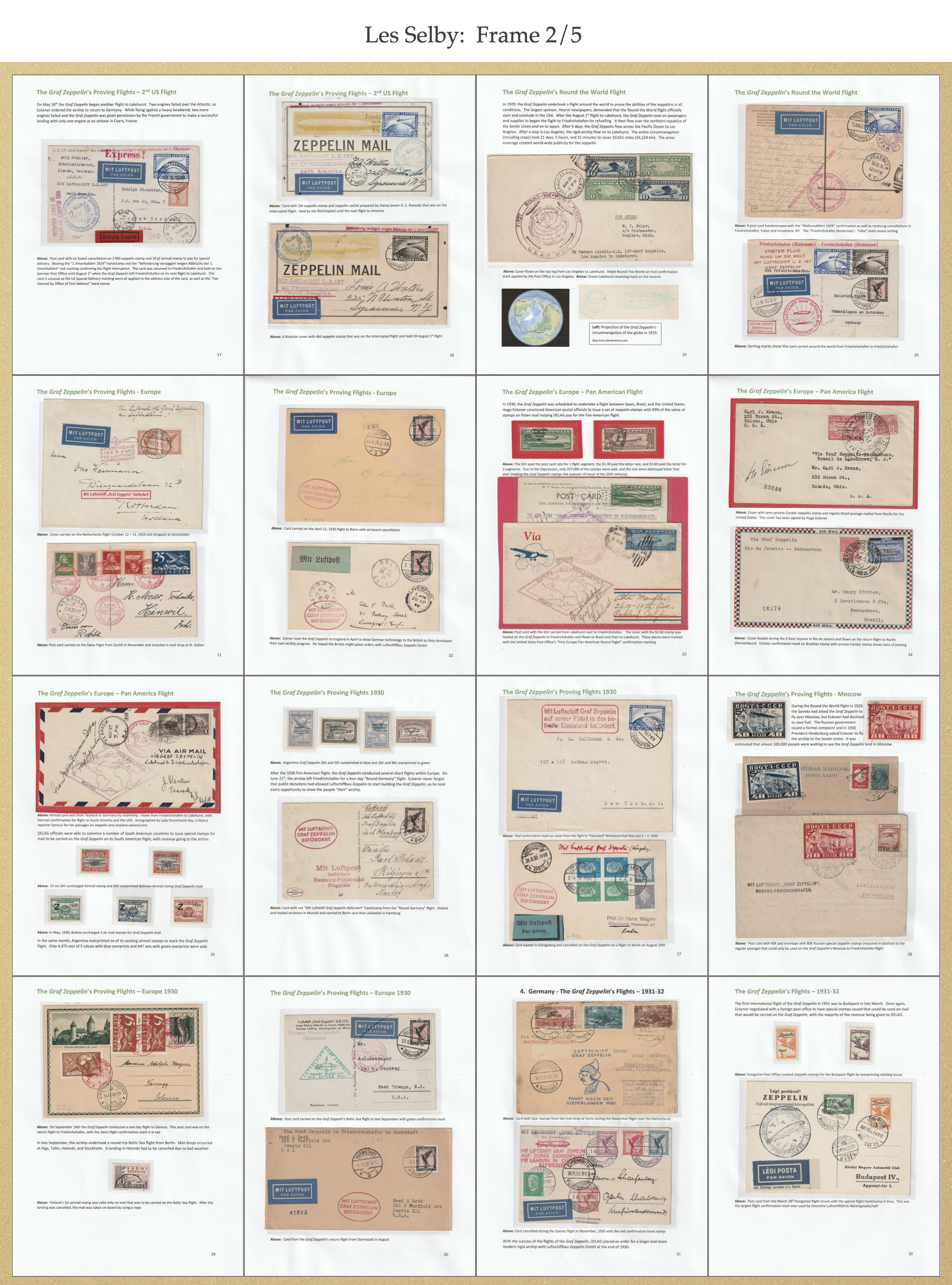
The largest part of the exhibit follows LZ 127 Graf Zeppelin. Its early transatlantic voyages, Mediterranean journeys and round-the-world flight demonstrate how postal material can reconstruct an airship’s itinerary. Covers and cards preserve dispatch points, flight cachets, onboard markings and evidence of interrupted journeys. The progression from proving flights to established services is therefore documented through postal evidence rather than aviation chronology alone. Stamps and covers also show the international reach of Zeppelin collecting, with postal administrations responding to both transport opportunities and philatelic demand. (Frames 1–2)
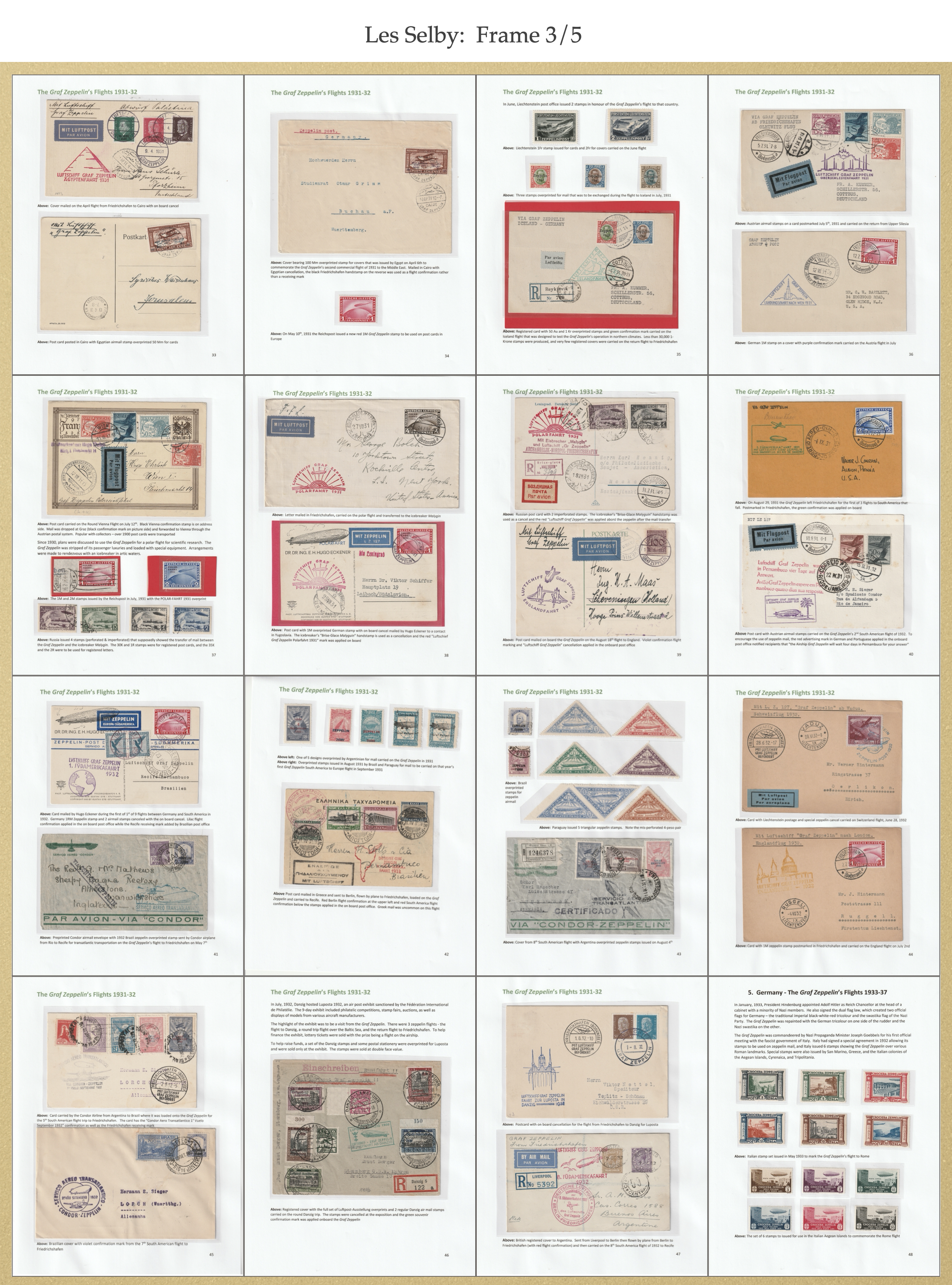
The Europe–Pan American flight receives particular attention through the United States Zeppelin stamps and their use on flown mail. These issues illustrate the financial relationship between postal administrations, collectors and airship operators: special postage helped support expensive flights, while collectors obtained tangible participation in journeys beyond their means as passengers. Subsequent pages broaden the geographical coverage through European flights, South American services and the polar expedition. Flight-specific overprints, registered mail and combinations of national issues reward close examination of the route and postal treatment of each item. (Frames 2–3)
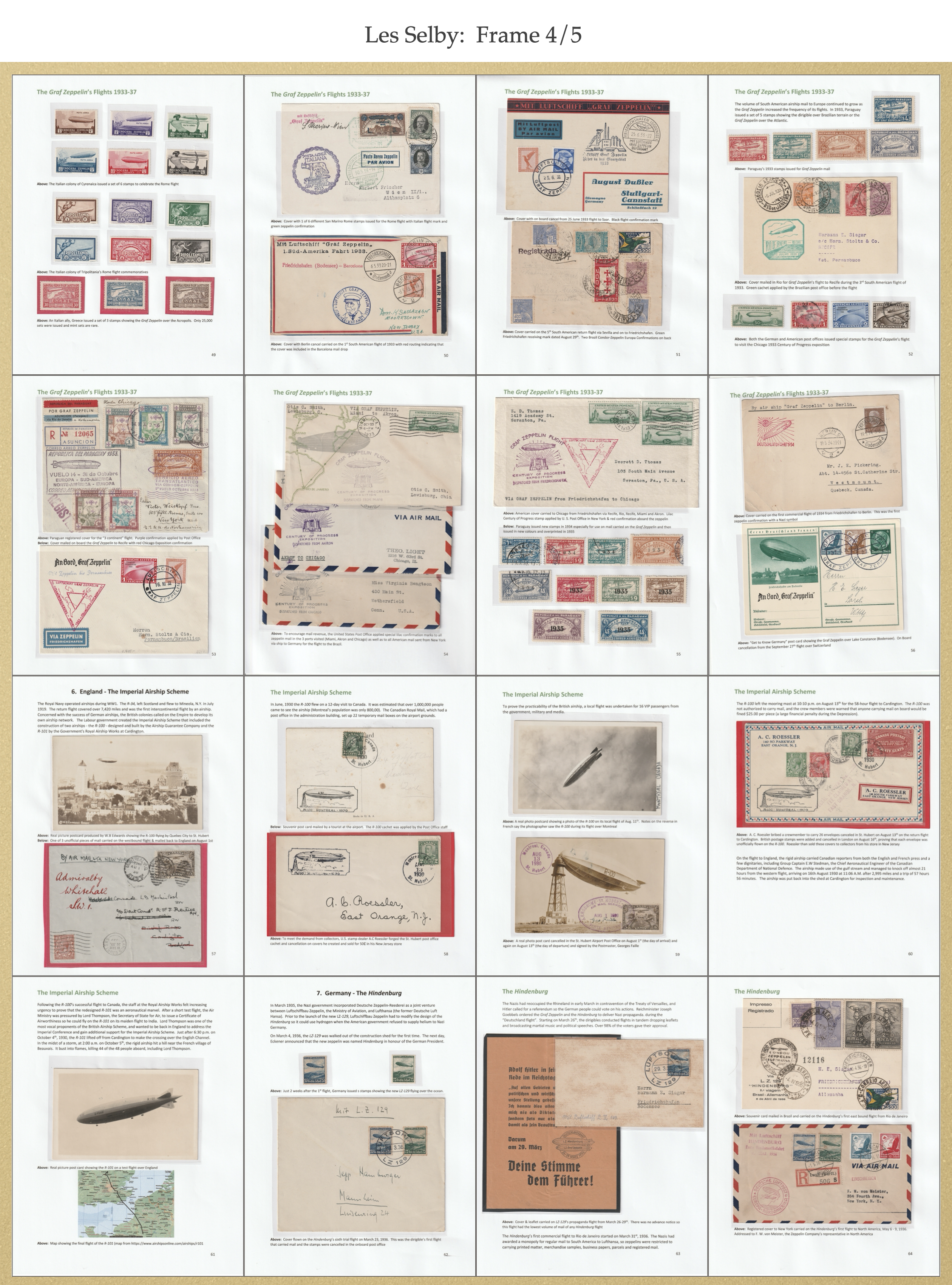
The later Graf Zeppelin material continues this emphasis on international participation. Italian, Greek, Hungarian, Brazilian and other issues accompany covers illustrating the expanding network and its associated publicity. The Chicago flight and South American connections demonstrate how major events and recurring services created distinct collecting opportunities. Throughout these sections, Selby presents stamps as functional components of airship mail as well as commemorative objects. Their significance emerges most clearly when denomination, cancellation, cachet and destination are considered together, placing individual pieces within the wider operation. (Frames 3–4)
Britain’s Imperial Airship Scheme
For Canadian collectors, the R100’s visit to the Montreal area provides an especially engaging focus. The British section combines photographs and postcards with postal material associated with Saint-Hubert, distinguishing souvenirs of the visit from mail actually carried. A westbound unofficial cover and an example carried on the return journey provide direct evidence of transatlantic carriage. Material bearing forged markings produced by dealer A. C. Roessler adds a cautionary dimension: contemporary enthusiasm created opportunities for fabrication as well as legitimate commemoration. The R101 disaster closes this account of Britain’s ambitions. (Frame 4)
Hindenburg and the end of an era
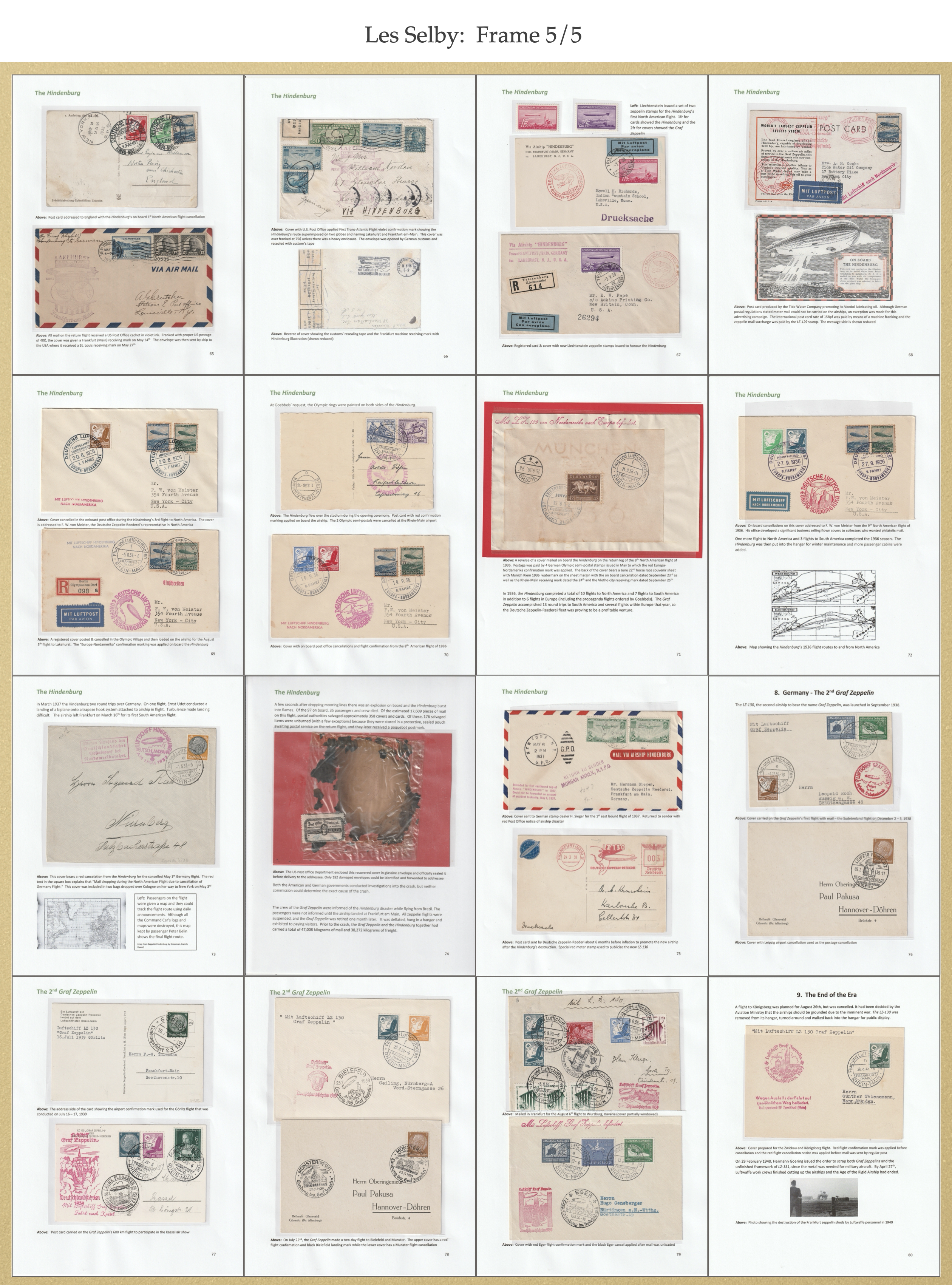
The Hindenburg section documents the further development of transatlantic airship services through first-flight material, onboard postings, registered covers and international frankings. It also reflects the political appropriation of airship publicity in Germany. The surviving crash cover provides the exhibit’s most sobering postal witness, connecting the destruction of the airship with the postal authorities’ efforts to recover and deliver damaged correspondence. Selby’s synopsis records expert certification of this item, while the exhibit shows its condition and the protective enclosure used for delivery. (Frames 4–5)
The final pages follow LZ 130 Graf Zeppelin II through its flights and cancelled operations before the dismantling of the remaining German rigid airships. Seen together, the material offers more than a succession of celebrated flights and dramatic losses. It demonstrates how aerophilately preserves the commercial calculations, patriotic promotion, collecting enthusiasm and practical postal arrangements behind an ambitious transport technology. Selby’s exhibit invites viewers to read each cover critically, distinguishing what was flown, what was commemorated, and what the surviving postal evidence can establish. (Frame 5)
Keywords
Rigid airships; Zeppelin mail; Graf Zeppelin; Hindenburg crash mail; Graf Zeppelin II; United States naval airships; R100; Imperial Airship Scheme; transatlantic airmail; flight cachets.